


In the first grade, my class went on a field trip to the local library to meet a children’s book author. The details of the event are blurry now—I don’t remember who the author was, let alone what their book was about—but I vividly remember how excited I was. Even back then, much of my developing personality was grounded in being a “bookworm”. Needless to say, the idea of meeting a real, live author had me pretty starstruck.
The author introduced himself to the class and read a few of his picture books to us. Afterwards, he pulled out a large binder and showed us all his previous drafts and notes, making a point of how writing a children’s book is more difficult than it seems. Finally, he opened the floor to questions. One kid raised her hand right away and asked, “How come none of your books are about girls?”
My classmate, keener than I was, noticed what I hadn’t. Every single one of this author’s books featured little boys, and even the ones that featured animals were about boy animals. The author explained that, while little boys tend to only read books about other little boys, little girls are willing to read books about either gender. Therefore, it just made more sense to write boy characters.
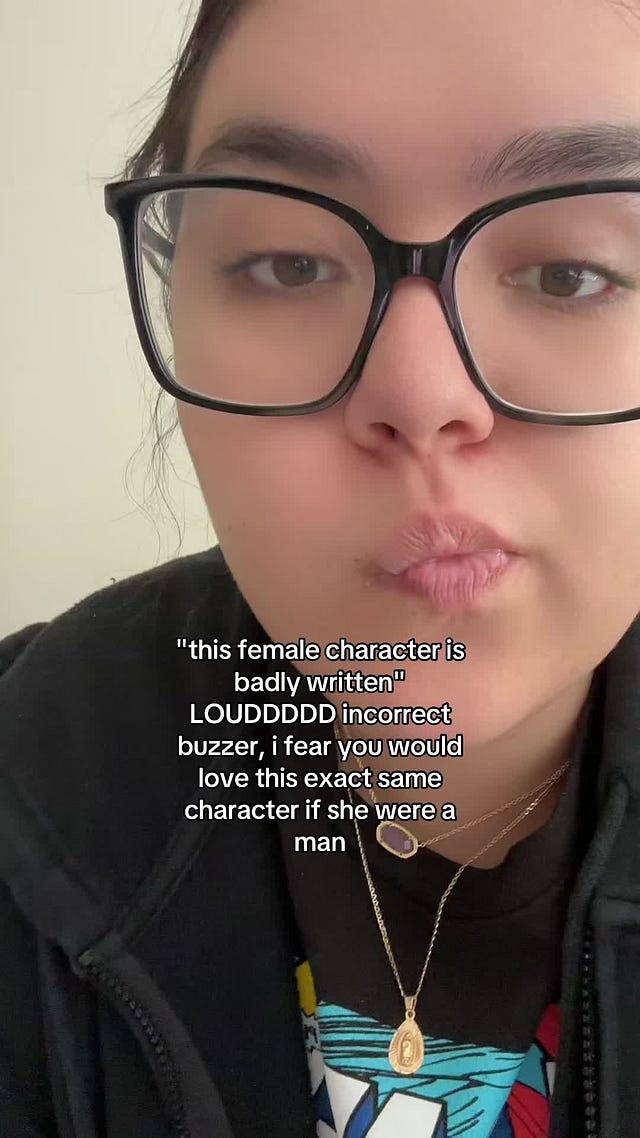
 Tiktok failed to load.
Enable 3rd party cookies or use another browser
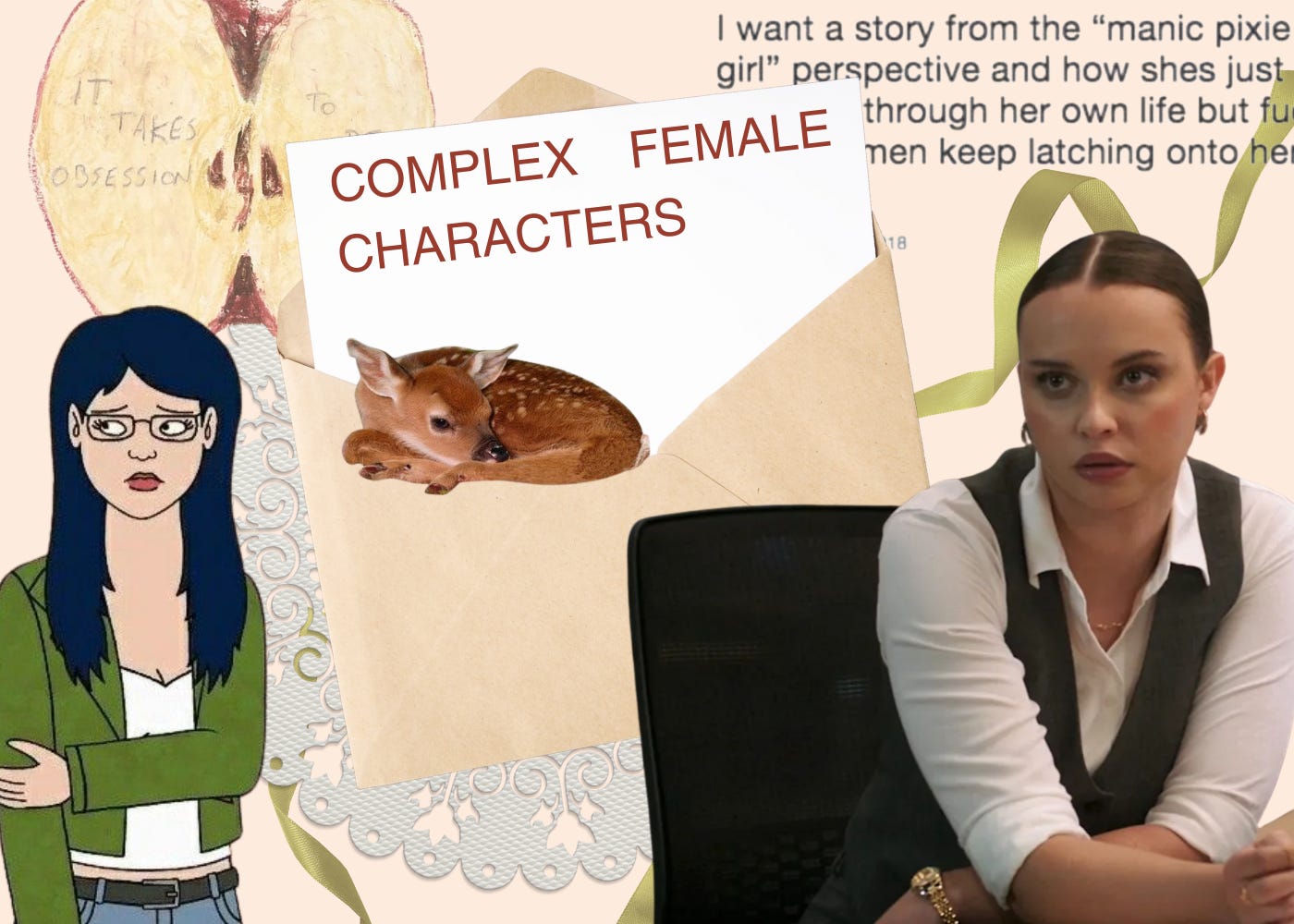
Even as a kid, I thought that was stupid. Unfortunately, as it turns out, the author had a point. As I got older and became involved in various YA literary fandoms, I noticed that—despite being heavily populated with young women—these spaces tended to hate female characters. I noticed it first with The Mortal Instruments fandom, and how the consensus was that Clary was so annoying, but Jace was perfect, charming, and witty. This pattern of “hated female main character, beloved male love interest” repeated itself with similar series like The Infernal Devices, Divergent, Twilight. However, the male main characters of Percy Jackson or The Maze Runner never suffered that same fate.
If you’re a writer, you’ll have learned about the Mary Sue. The Mary Sue is a character archetype, used to describe a poorly written fictional character with no flaws whatsoever. Generally, a perfect, idealized female character. Think Bella Swan, Rey from Star Wars. Mary Sues get called out a lot in media, and rightfully so, but I’ve always believed that many of the female characters that receive this criticism would be considered likeable protagonists if only they were male. I mean, just think of Harry Potter. None of this is to say that we should be writing bland female characters, but to point out the different standards we hold male and female characters to.
I was reminded of this issue with the newest season of The Summer I Turned Pretty. The show introduces two new female characters: Agnes, one of Conrad’s Stanford friends, and Denise, a coworker and potential love interest of Steven. I found Denise’s character to be a breath of fresh air. She’s clever and career-oriented, and challenges the show’s male characters regularly. Fans immediately distrusted her, which I could write off as the effect of her being the “other woman” in a love triangle, but they also had the same reaction to Agnes’s character, who was clearly established to be nothing more to Conrad than a platonic confidante.
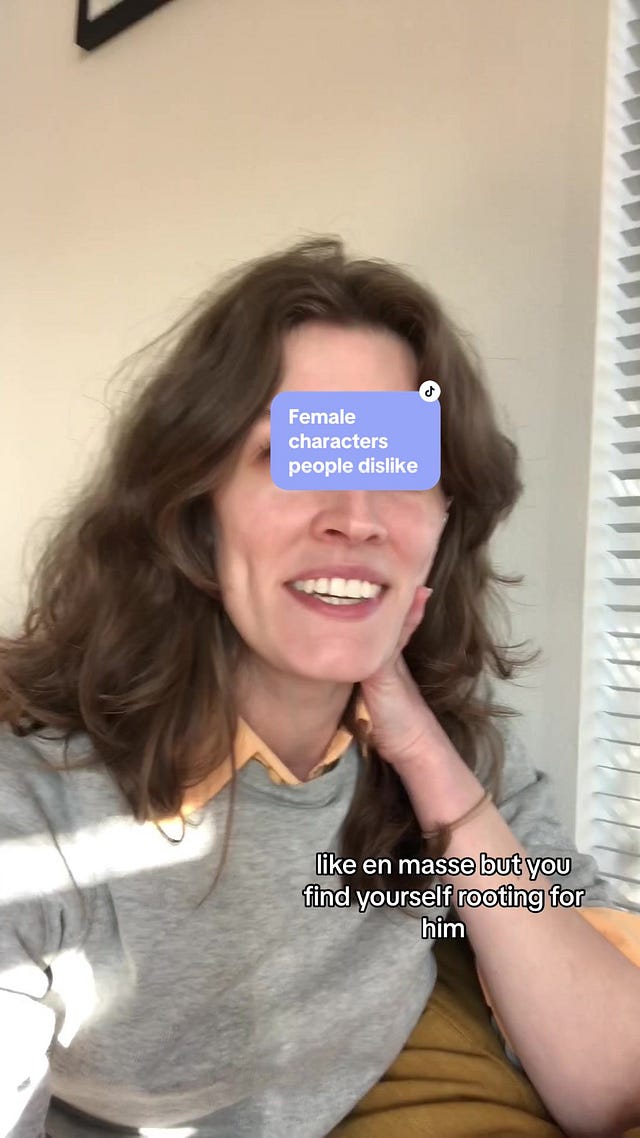 Tiktok failed to load.
Enable 3rd party cookies or use another browser
I saw a post the other day that I can’t find now, but it basically described the different ways in which audiences react to poorly written male and female characters. Whereas poorly written women are discarded, poorly written men get transformed into entirely different characters. Fans create such elaborate backstories and rich inner lives for these male characters that they become synonymous with the canon itself. No wonder it’s “easier to write men”—in some ways, an audience does half the writer’s work.
The difference between men and women—as book characters and as real people—is that audiences always default to a man being innocent, misguided, charming. He could be a serial killer with a specific penchant for pregnant women, and there’d be millions and millions of fans finding ways to justify it. Whereas a female character could so much as make a snide comment a couple of times, and she’s immediately irredeemable. A woman is always guilty; everyone’s just waiting for her to give them a reason why.
Trina Keeps Trying is a collection of poems, thoughts, and cryptic messages from the keyboard of Trina Das. Consider supporting with a premium subscription for ten thousand years of good karma.
I love this. Interestingly, when I started buying children's books for my son, I noticed that I was subconsciously not selecting books that featured female leads. I couldn't quite figure out why, but this article summarises it so well! Now I've been reading the 'Maisy' book series to him, and purposefully seeking out books with various diverse perspectives. Hopefully, he'll grow up in admiration of the complexity of womanhood!
“A woman is always guilty; everyone’s just waiting for her to give them a reason why.” Ain’t that the TRUTH. It always drove me insane when I saw people hating on female characters for things so small— one misstep and it’s all over for her. Yet, when a male character does a wrong, he’s forgiven and even praised. Incredible post !!